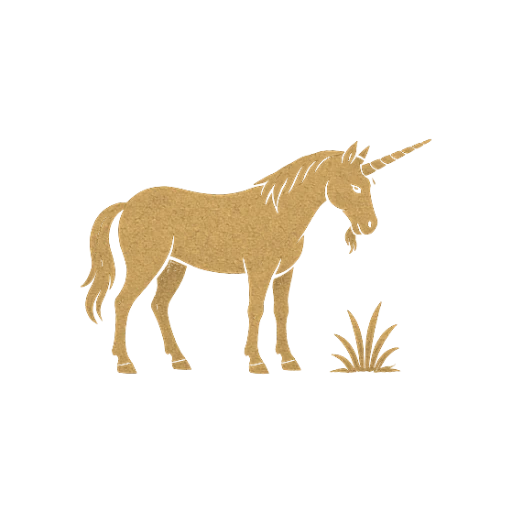
Lunar day 5: the unicorn
Lunar day 5 is the day of digestion: what has been taken in becomes part of you, and the gift is discernment in what you feed the body and the mind.
- The Moon on this day
- waxing crescent, about 21% of the disc lit
The character of lunar day 5
The unicorn of the old bestiaries could purify water with its horn, and the fifth lunar day is read through that image of transformation: what goes in is changed into something else. The tradition treats it as a day of assimilation, when the impressions, food and information of the first days of the month are worked through. The crescent is thickening in the evening sky. The day is less about starting and more about letting what has started take root — which is easier when there is not too much at once.
What the day favors
The day favors simple, well-chosen food, unhurried meals, and time to think over what has been read, heard or learned this week. It suits sorting notes, finishing a book rather than opening three, and talking a new idea through until it makes sense. Choosing what to take in — for the body and for attention — is the gift of the unicorn.
What can wait
What can wait is swallowing without chewing, from meals to news. Scrolling through more than can be absorbed, eating on the run, and agreeing to new commitments before the last ones are understood are the shadow of the fifth day. What is taken in carelessly today tends to sit heavily for a while.
With other people
With other people, the fifth day favors unhurried company: a long meal, a slow conversation, time to understand rather than to react. It is a good day to let a friend finish a thought, and to give a new acquaintance the time it takes to be known. Snap judgments about people sit as badly as rushed food.
The question of the day
The day asks what you have taken in this week that has not yet been digested — and what you could leave unread for now.
When lunar day 5 falls
The dates in this table count lunar days (also called moon days) from the exact new moon, the same moment everywhere: day one is the first twenty-four hours after it — a table read anywhere cannot follow one horizon. The line at the top of the page counts the traditional way, from moonrise where you are, which can be up to a day apart. How the lunar day is counted
Times are in UTC.
| Begins | Ends |
|---|---|
Updated October 7, 2026
The lunar days
 Lunar day 1: the lamp
 Lunar day 2: the horn of plenty
 Lunar day 3: the leopard
 Lunar day 4: the tree
 Lunar day 5: the unicorn
 Lunar day 6: the cloud
 Lunar day 7: the wind rose
 Lunar day 8: the phoenix
 Lunar day 9: the bat
 Lunar day 10: the spring
 Lunar day 11: the crown
 Lunar day 12: the cup
 Lunar day 13: the wheel
 Lunar day 14: the trumpet
 Lunar day 15: the serpent
 Lunar day 16: the dove
 Lunar day 17: the grape cluster
 Lunar day 18: the mirror
 Lunar day 19: the spider
 Lunar day 20: the eagle
 Lunar day 21: the horse
 Lunar day 22: the elephant
 Lunar day 23: the crocodile
 Lunar day 24: the bear
 Lunar day 25: the tortoise
 Lunar day 26: the toad
 Lunar day 27: the staff
 Lunar day 28: the lotus
 Lunar day 29: the octopus
 Lunar day 30: the swan