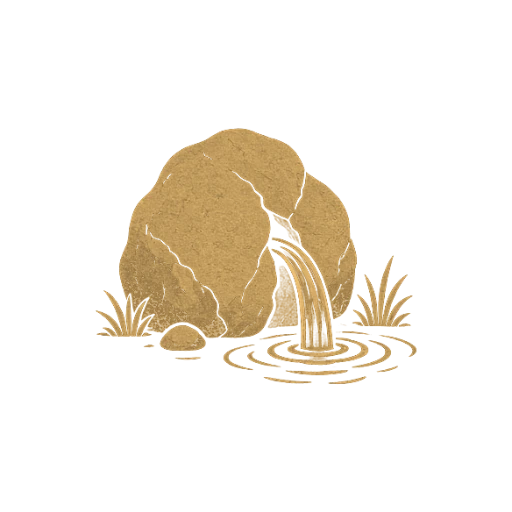
Lunar day 10: the spring
Lunar day 10 is the day of roots: kin, beginnings, where you are from — and the gift is standing on your own origin rather than arguing with it.
- The Moon on this day
- waxing gibbous, about 72% of the disc lit
The character of lunar day 10
A spring rises from underground water that fell as rain long ago and far away, and the tenth lunar day is read through that image of a source: family, ancestry, home, the traditions that formed a person before they could choose. The tradition treats it as a good day for the household and for the long view of one's own story. The Moon is waxing gibbous, the month's growth well under way. Drawing on what came before gives the plan a deeper footing, and the day invites looking at inheritance — of habits as much as of things — with gratitude and some honesty.
What the day favors
The day favors time with family, calling an older relative, looking through old photographs, cooking a dish from home. It suits work on the house, on the family's practical affairs, and on anything meant to last for years rather than weeks. Standing on your own origin — knowing what you have been given and what you choose to keep — is the gift of the spring.
What can wait
What can wait is getting stuck in old grudges. Reopening ancient family quarrels, blaming the beginning for everything since, and measuring oneself against the family's expectations are the shadow of the tenth day. The spring gives water; it does not need to be dug up.
With other people
With other people, the tenth day turns toward family and old friends — the people who knew you before you chose who to be. It is a good day for a family meal, for stories told across generations, and for thanking someone who gave you a start. Old quarrels are better left to rest than reopened.
The question of the day
The day asks what you have inherited that still feeds you — and what you carry only out of habit.
When lunar day 10 falls
The dates in this table count lunar days (also called moon days) from the exact new moon, the same moment everywhere: day one is the first twenty-four hours after it — a table read anywhere cannot follow one horizon. The line at the top of the page counts the traditional way, from moonrise where you are, which can be up to a day apart. How the lunar day is counted
Times are in UTC.
| Begins | Ends |
|---|---|
Updated October 7, 2026
The lunar days
 Lunar day 1: the lamp
 Lunar day 2: the horn of plenty
 Lunar day 3: the leopard
 Lunar day 4: the tree
 Lunar day 5: the unicorn
 Lunar day 6: the cloud
 Lunar day 7: the wind rose
 Lunar day 8: the phoenix
 Lunar day 9: the bat
 Lunar day 10: the spring
 Lunar day 11: the crown
 Lunar day 12: the cup
 Lunar day 13: the wheel
 Lunar day 14: the trumpet
 Lunar day 15: the serpent
 Lunar day 16: the dove
 Lunar day 17: the grape cluster
 Lunar day 18: the mirror
 Lunar day 19: the spider
 Lunar day 20: the eagle
 Lunar day 21: the horse
 Lunar day 22: the elephant
 Lunar day 23: the crocodile
 Lunar day 24: the bear
 Lunar day 25: the tortoise
 Lunar day 26: the toad
 Lunar day 27: the staff
 Lunar day 28: the lotus
 Lunar day 29: the octopus
 Lunar day 30: the swan